Distance-Based Outlier Detection - Grid-Based Method
Works in a smiliar way to the Distance-Based Outlier Detection - Nested Loop Method but it tries to reduce the amount of loops by grouping multiple Data Objects into cells.
Create a grid
- Divide data space into a multidimensional grid
- Each cell has diagonal length
- Each cell has length where is the dimension of the dataset
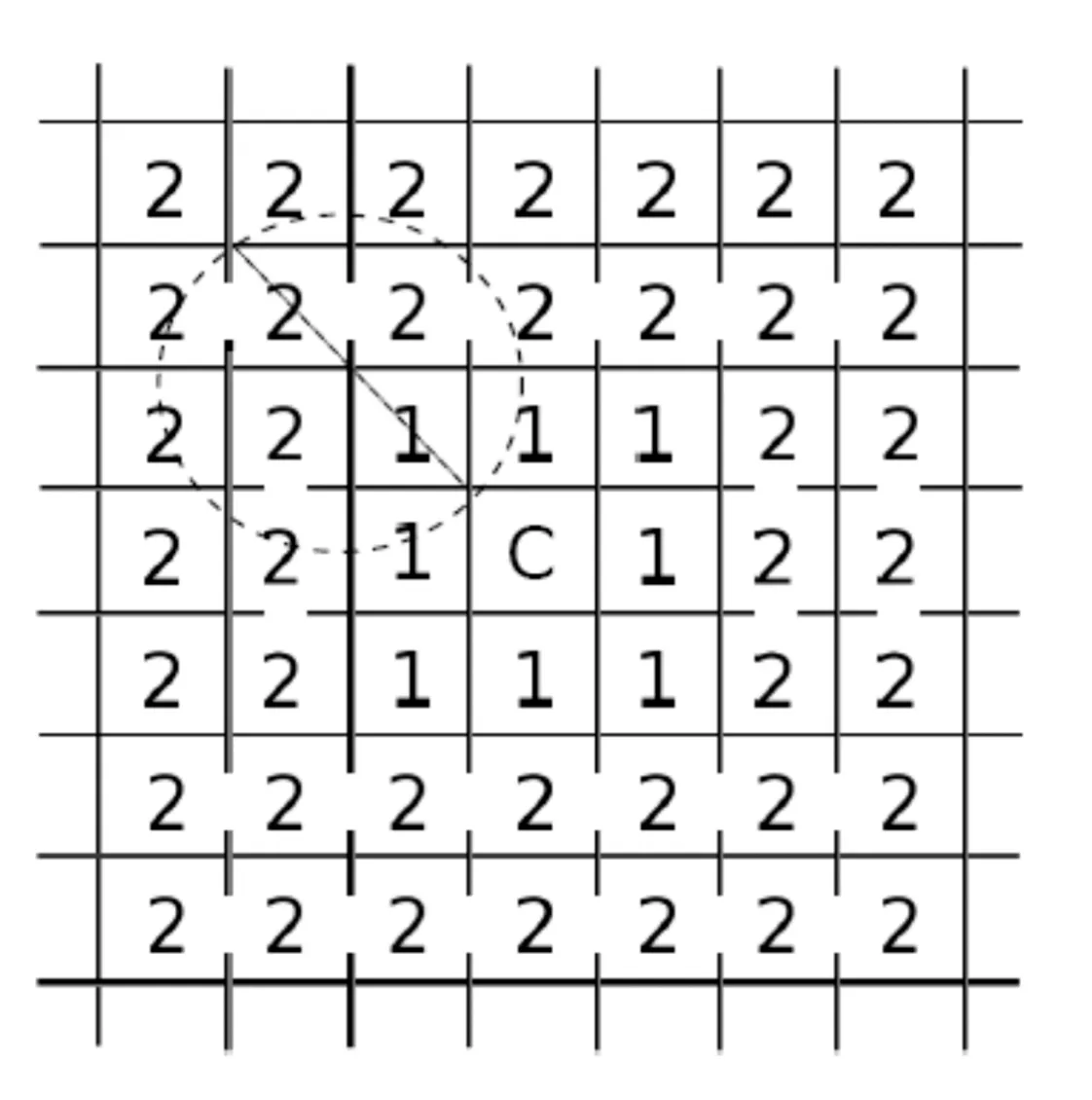
- There are Level 1 cells which have
- There are Level 2 cells which have
A grid will look like this when the objects in cell have to be classified:
Cell Pruning Rules
If
then every object in is not an Outlier.
If
then all objects in are outliers.
For all other cases the objects have to be checked individually. For example with the Distance-Based Outlier Detection - Nested Loop Method.